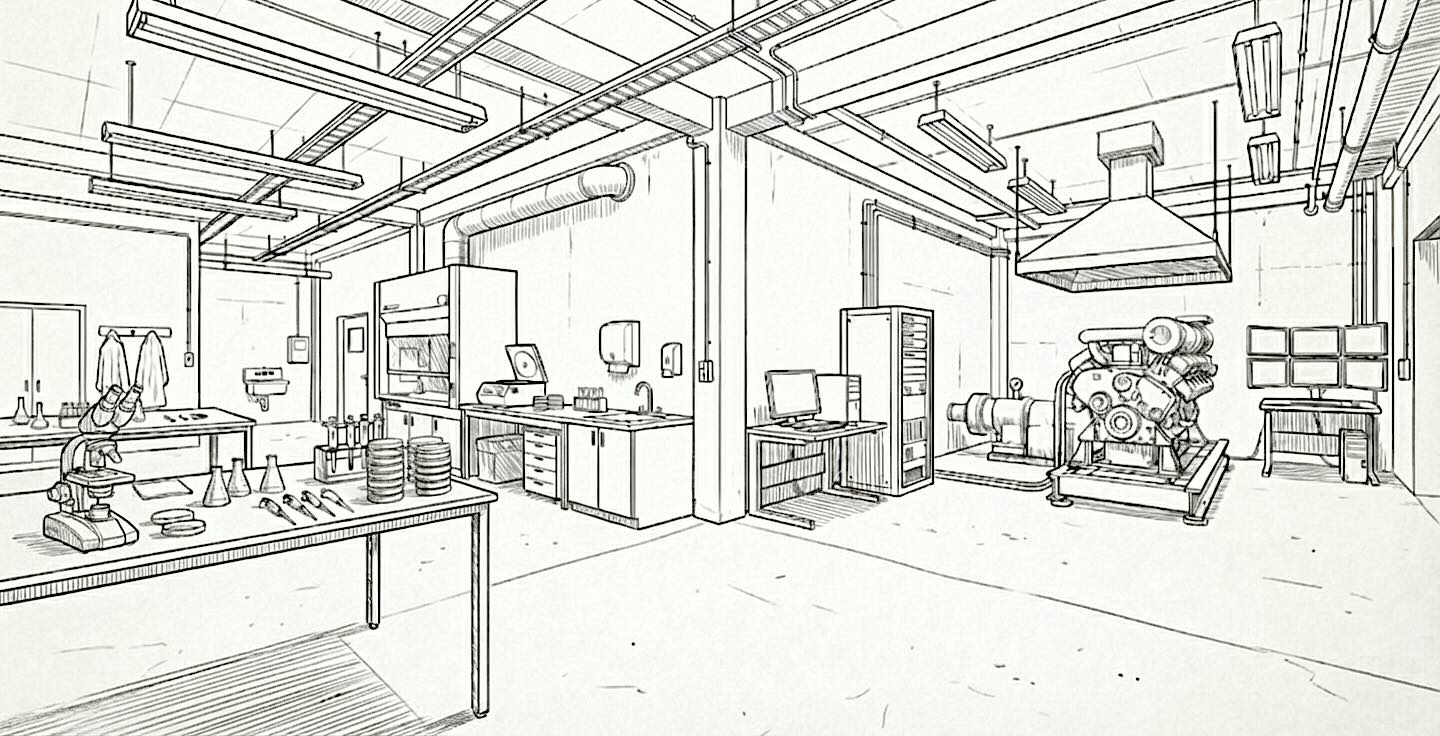
After 15 years in the life sciences, I moved from the wet lab to the test bench and ventured into automotive engineering.
While I’m still fresh to engine calibration and powertrain optimisation, I take stock of what I learnt when designing for drug discovery, clinical trials, and genomics. Here are the design principles I bring with me into the world of engineering.
1. Respect existing solutions
Tech often tries to ‘fix disease’ or ‘fix healthcare’ by disrupting, even discarding practical solutions born out of decades of compromise. Yet, many tech disruptions fail when confronted with real life. Complex humans and messy reality set their own rules.
My first principle is humility. Understanding why current solutions are the way they are is fundamental for driving innovation in complex environments. I bring creative curiosity and genuine respect for what already works. And patience to learn.
2. Trust is hard-earned, easily lost
I saw it firsthand in the life sciences: companies impatiently test new solutions in search of the next competitive edge, but trust in new tools takes time to develop. It requires transparency (nobody wants a ‘black box’), traceability (‘Can I explain this to colleagues and regulators?’), and reliable data foundations.
My second principle: trust-first design. While industries differ, trust is fundamentally earned and lost in the same way everywhere. User confidence in their tools, data, and decisions is my top priority.
3. Small and big wins combined
Unlike in high-volume sectors, life science workflows culminate in a few high-stakes decisions (diagnosis, R&D investment) rather than thousands of small transactions. Therefore, efficiency doesn’t come from reducing the number of clicks alone, it must also enable confident decision-making that keep work on track without delays or costly rework.
Consider designing a tool for genomic diagnoses in rare diseases or a platform for Phase III clinical trials, each costing $300 million.
My third principle is perspective. Tactical usability improvements may please users, but won’t transform the business. I focus on everything: don’t overlook strategic gains across the entire project lifecycle while streamlining micro-interactions.
4. Bring back the joy
Despite recent breakthroughs in biomedical sciences, work in the industry remains traditional. Most data work is done in Excel, collaboration happens in comments in Word, pace is slow. Over time, this can crush the original joy of science: discovering new things and pushing the boundaries of what’s possible.
This isn’t unique to life sciences. Automotive engineers I’ve spoken to feel similarly. My final principle is: use design to restore the joy of engineering. My ambition at Secondmind is to design AI tools that augment engineers’ capabilities and reconnect them with what they love — the awe of discovery, the satisfaction of solving ambitious problems, and the joy of building amazing things.